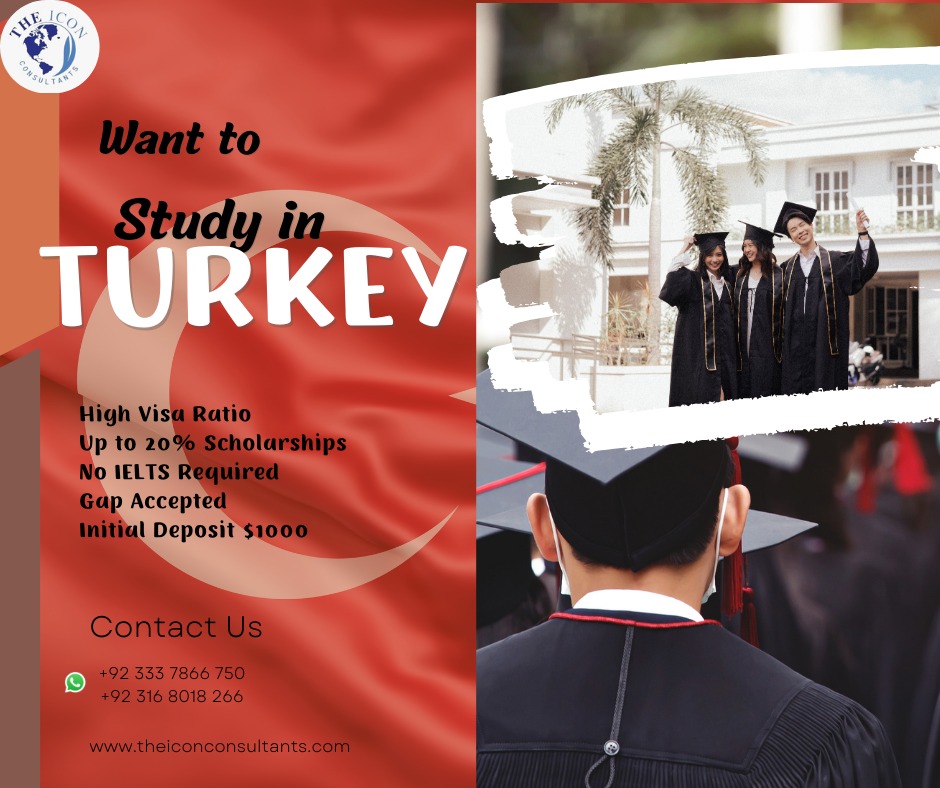
Studying in Turkey can be a great option for Pakistani students due to its high-quality education system, affordable tuition fees, and diverse cultural experiences. Here’s a general guide for Pakistani students interested in studying in Turkey:
Admission Requirements:
- Language Proficiency: Most Turkish universities offer programs in English, but proficiency in Turkish can also be advantageous. You may need to provide English proficiency test scores like TOEFL or IELTS.
- Academic Credentials: You’ll typically need to provide your high school or undergraduate transcripts, along with any standardized test scores (SAT, ACT, etc.) depending on the program’s requirements.
- Application Form: Complete the application form provided by the university or through the centralized admission system (e.g., ÖSYM for undergraduate programs).
- Letters of Recommendation: Some programs may require letters of recommendation from teachers or professors.
- Statement of Purpose: Write a statement outlining your academic interests, career goals, and why you wish to study in Turkey.
Visa Requirements:
- Student Visa: Once accepted by a Turkish university, you’ll need to apply for a student visa. You can obtain the necessary information and application forms from the Turkish embassy or consulate in Pakistan.
- Documents: Generally, you’ll need your acceptance letter from the university, proof of financial means, passport photos, and other supporting documents as per embassy requirements.
Financial Considerations:
- Tuition Fees: Turkish universities offer relatively affordable tuition fees compared to Western countries, but costs vary depending on the institution and program.
- Scholarships: Explore scholarship opportunities offered by Turkish universities, the Turkish government, or international organizations.
- Living Expenses: Consider the cost of accommodation, food, transportation, and other living expenses while studying in Turkey.
Cultural Adjustment:
- Language: Learning basic Turkish can ease your transition and enhance your experience in Turkey.
- Cultural Awareness: Familiarize yourself with Turkish culture, customs, and etiquette to adapt more easily.
- Support Services: Many universities offer support services for international students, including orientation programs, counseling services, and student clubs.
Health Insurance:
Ensure you have adequate health insurance coverage either through a plan provided by the university or by purchasing private health insurance in Turkey.
Work Opportunities:
International students in Turkey are allowed to work part-time during their studies. However, there may be restrictions, so it’s essential to check the regulations set by the Turkish government.
Stay Informed:
Stay updated with any changes in visa regulations, academic requirements, or other relevant information by regularly checking official sources and contacting your university’s international office.